


2026-06-23
The data and code for this workshop are available at https://jakubnowosad.com/ml4eo2026workshop.
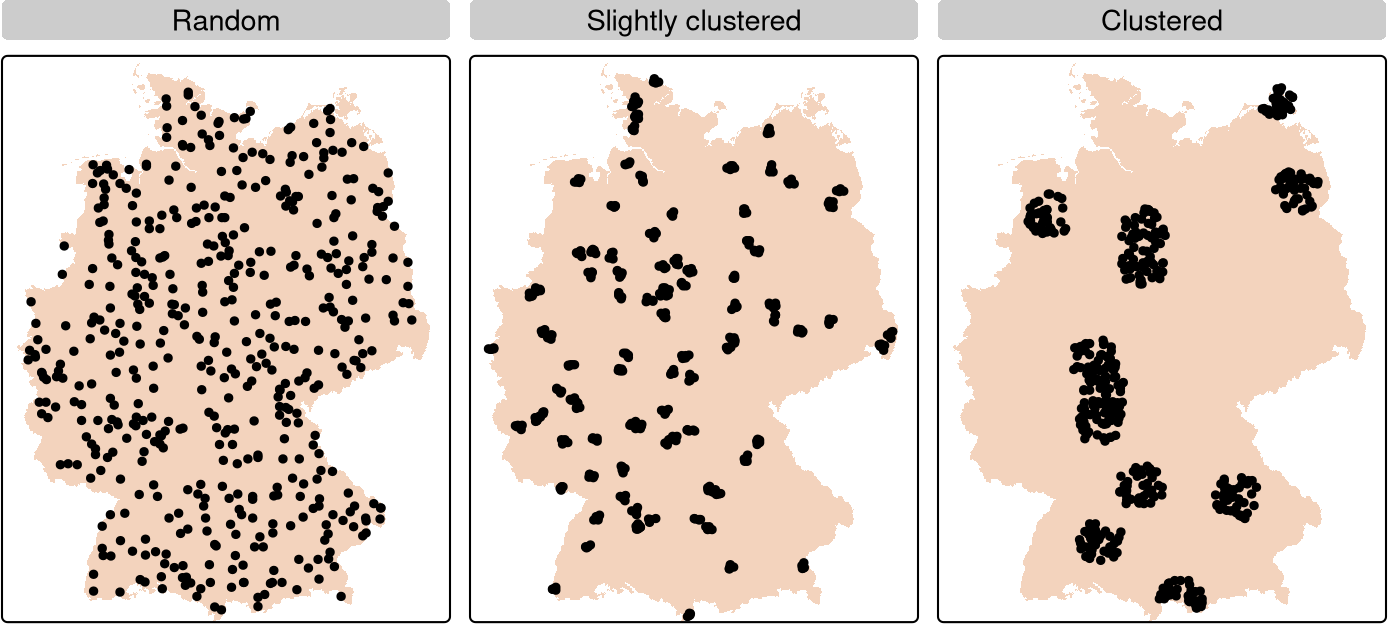
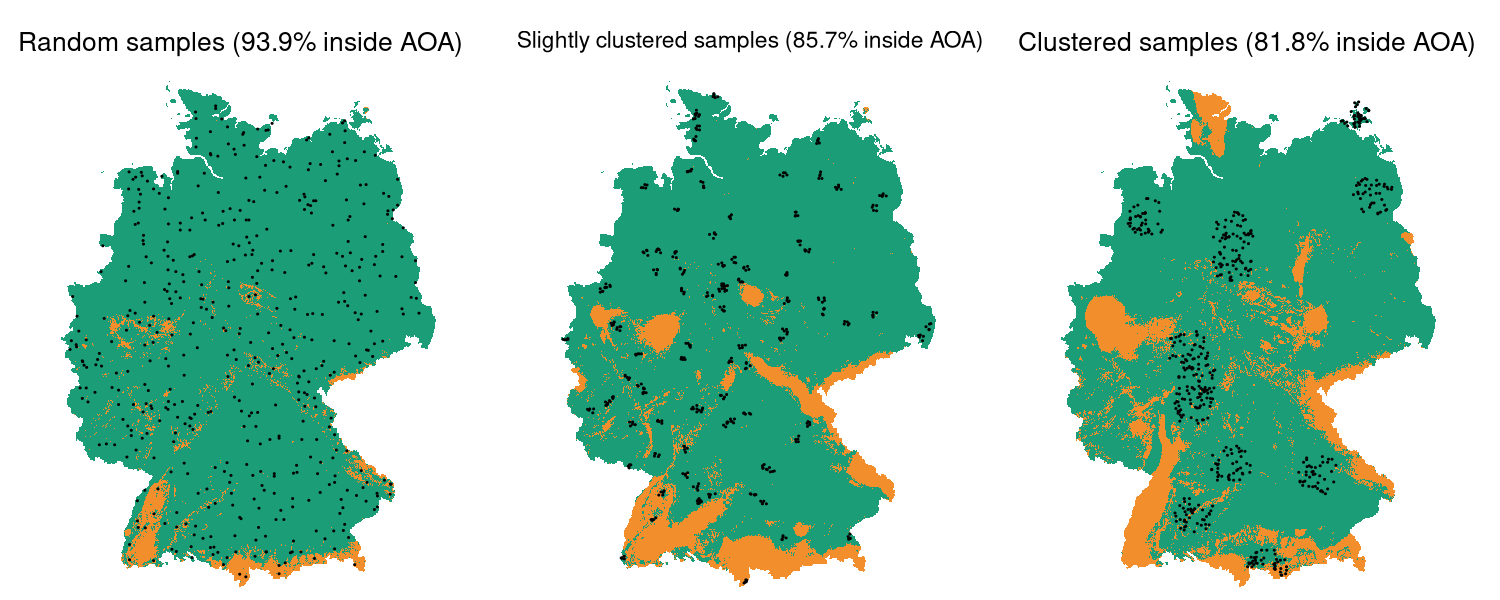
The main dataset, Germany, is a synthetic dataset based on real-world predictors and a simulated target variable, and three sampling designs.
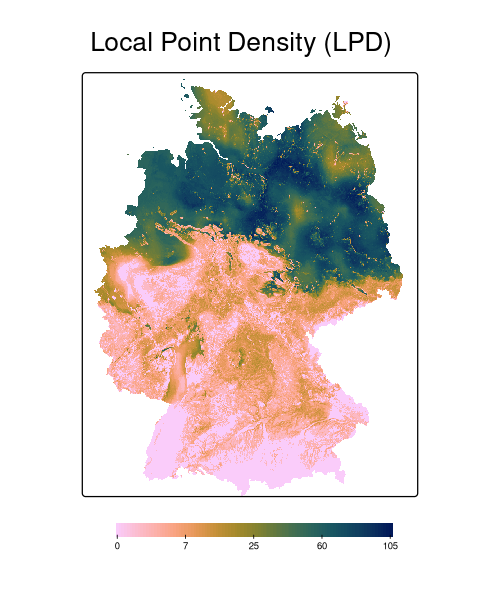
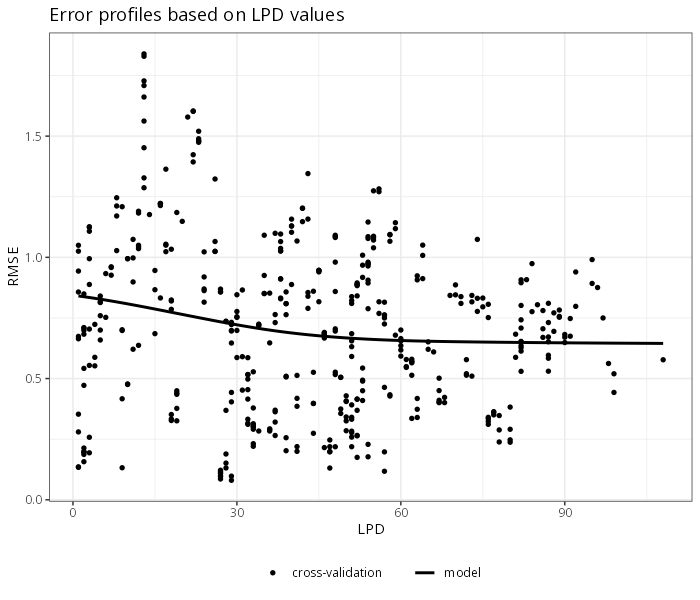
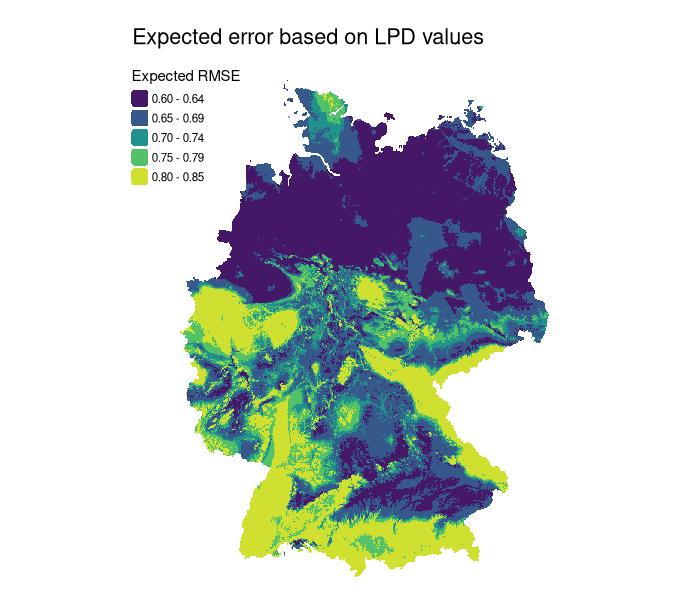
Identify areas where the environment is not well represented, making predictions less trustworthy (Area of Applicability – AoA, Meyer and Pebesma, 2021); also local point density (LPD, Schumacher et al., 2025)
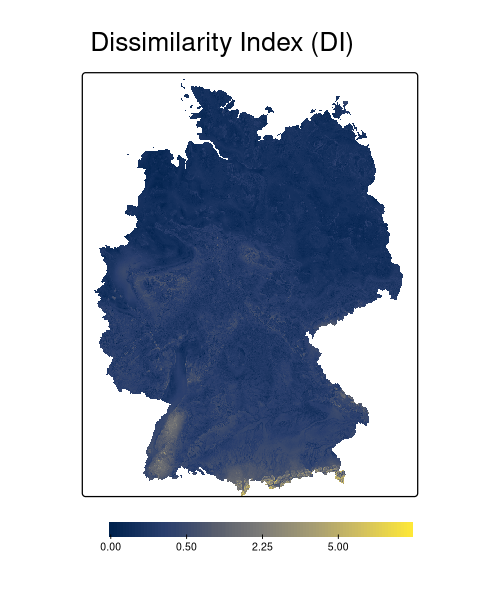
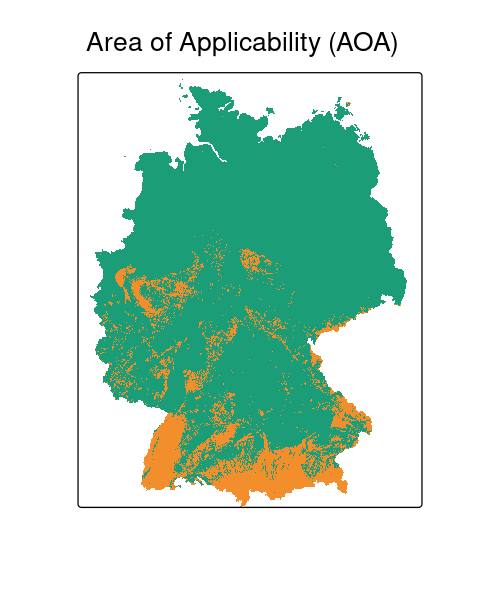
Area of applicability for different validation strategies
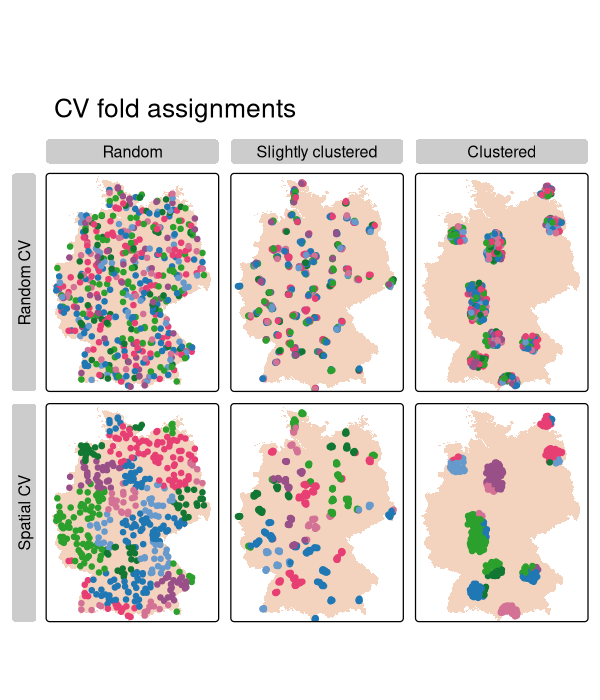
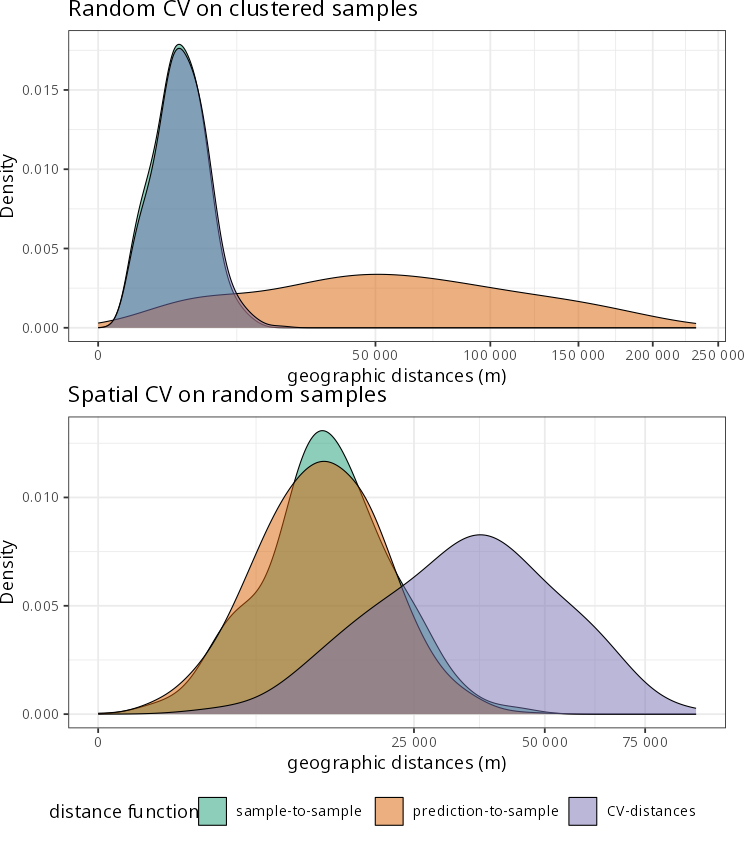
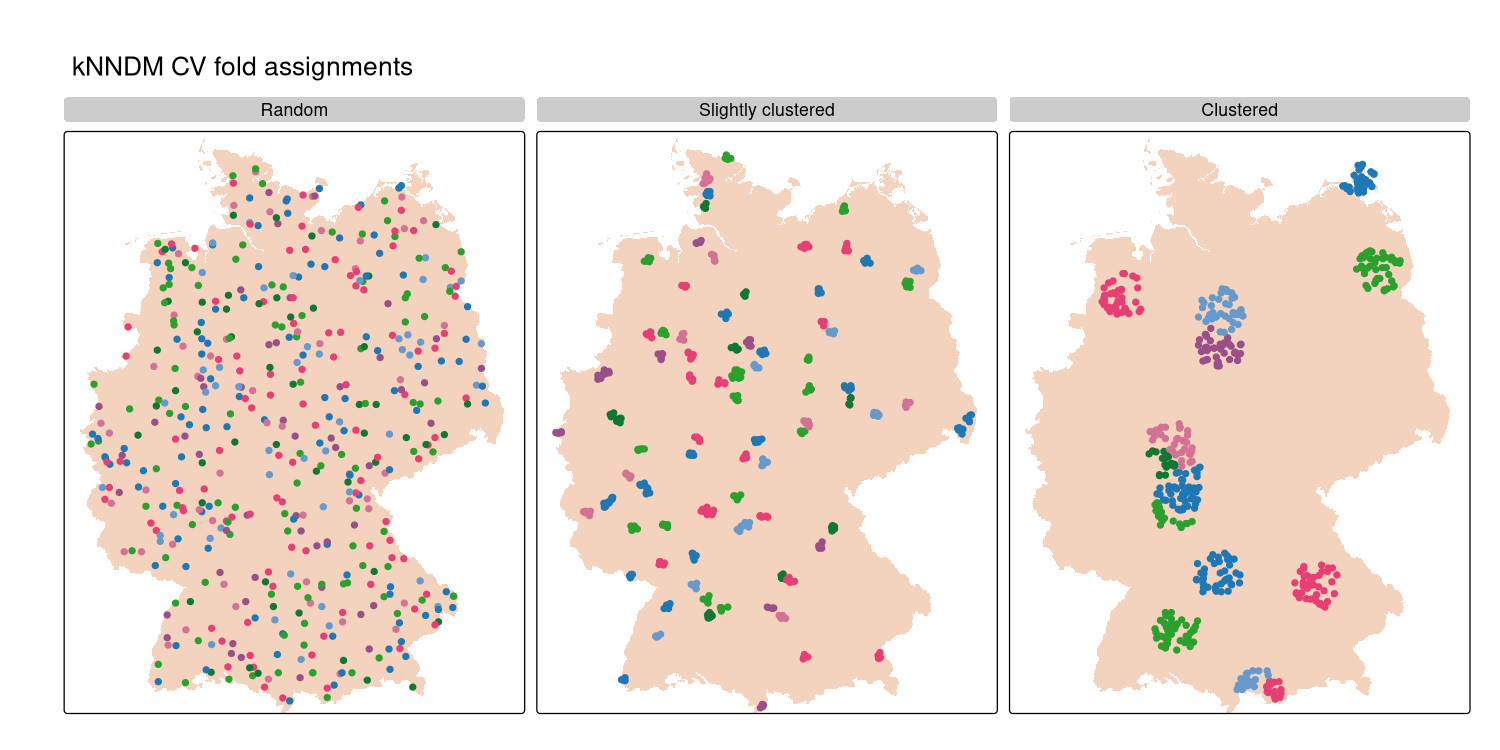
k-fold Nearest Neighbor Distance Matching (kNNDM, Linnenbrink et al., 2024) matches folds to the prediction scenario using distance structure (either in geographic or predictor space).
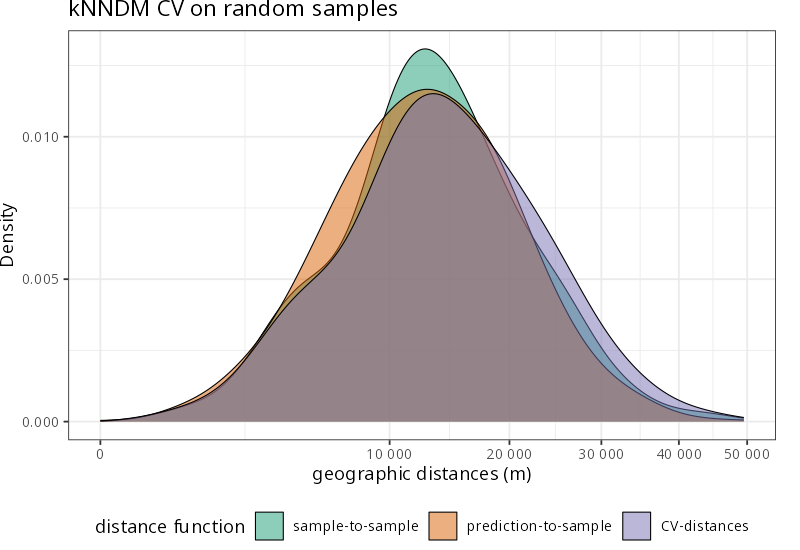
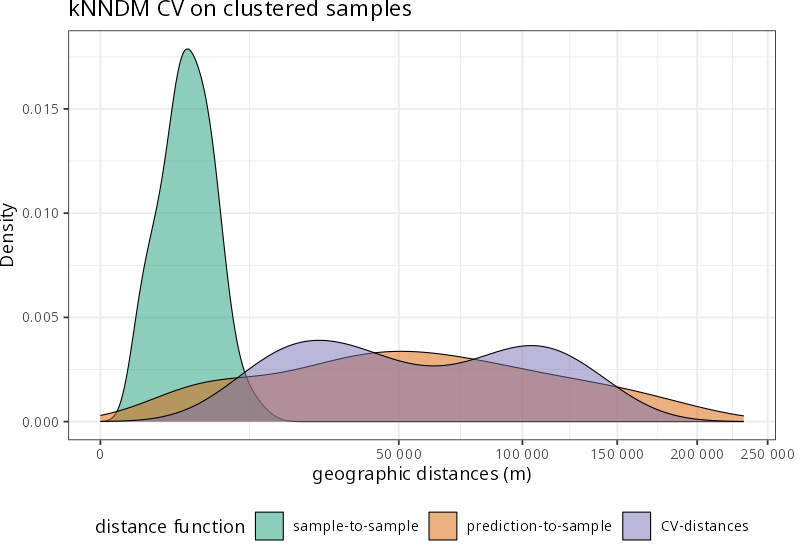
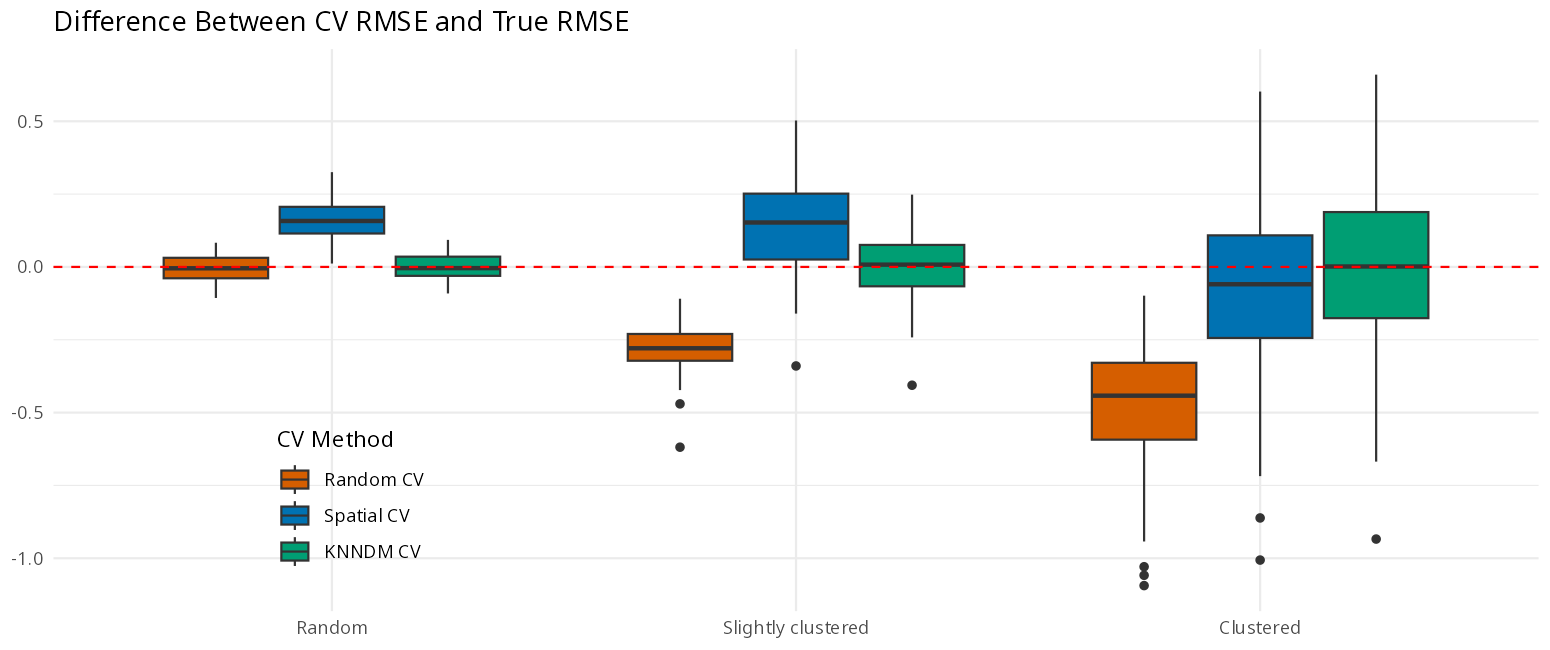
Evaluation results for different validation strategies
Error profiles show how expected error (based on AoA or LPD) relates to true error. They can be used to identify where predictions are more or less trustworthy, and to adjust the AoA threshold or interpret LPD values.
Mastodon: fosstodon.org/@nowosad
Website: https://jakubnowosad.com
Workshop materials:
https://jakubnowosad.com/ml4eo2026workshop